Anxiety
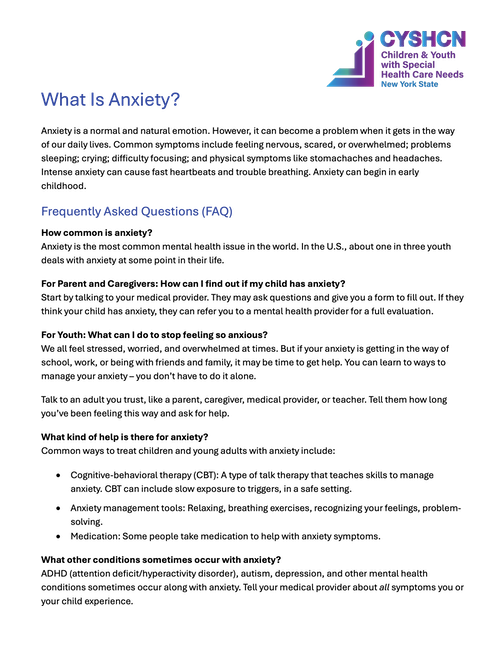
Anxiety is a normal and natural emotion. However, it can become a problem when it gets in the way of our daily lives. Common symptoms include feeling nervous, scared, or overwhelmed; problems sleeping; crying; difficulty focusing; and physical symptoms like stomachaches and headaches. Intense anxiety can cause fast heartbeats and trouble breathing. Anxiety can begin in early childhood.
Frequently Asked Questions (FAQ)
How common is anxiety?
According to the World Health Organization, anxiety is the most common mental health issue in the world. In the U.S., about one in three youth deals with anxiety at some point in their life.
For Parent and Caregivers: How can I find out if my child has anxiety?
Start by talking to your medical provider. They may ask questions and give you a form to fill out. If they think your child has anxiety, they can refer you to a mental health provider for a full evaluation.
For Youth: What can I do to stop feeling so anxious?
We all feel stressed, worried, and overwhelmed at times. But if your anxiety is getting in the way of school, work, or being with friends and family, it may be time to get help. You can learn to ways to manage your anxiety — you don't have to do it alone.
Talk to an adult you trust, like a parent, caregiver, medical provider, or teacher. Tell them how long you've been feeling this way and ask for help.
What kind of help is there for anxiety?
Common ways to treat children and young adults with anxiety include:
- Cognitive-behavioral therapy (CBT): A type of talk therapy that teaches skills to manage anxiety. CBT can include slow exposure to triggers, in a safe setting.
- Anxiety management tools: Relaxing, breathing exercises, recognizing your feelings, problem-solving.
- Medication: Some people take medication to help with anxiety symptoms.
See the resources below for more information about getting help for anxiety.
What other conditions sometimes occur with anxiety?
ADHD (attention-deficit/hyperactivity disorder), autism, depression, and other mental health conditions sometimes occur along with anxiety. Tell your medical provider about all symptoms you or your child experience.
Talking with a Medical Provider
When talking with medical providers or specialists, you might want to:
- Bring notes! Ahead of the appointment, take notes on anything you've noticed that worries you. Share any concerns that others have pointed out.
- Ask questions like:
- "Is this fear normal for someone this age?"
- "What else could be involved?"
- "What treatment options are there for this level of anxiety?"
What You Can Do at Home
While waiting for your appointment, it may help to:
- Gently push yourself: Approach anxious situations with small steps.
- Calm your body: Deep breaths and stretching can help with physical feelings of anxiety.
- Practice helpful thoughts: Try interrupting worries with more useful thinking ("I've done this before; I can do it again.")
- Do things you enjoy: Build in healthy activities you like such as sports, yoga, art, writing, or playing music. Avoiding social media for a while can help.
Learning about anxiety and getting help is a journey. You're not alone.
Go Deeper
Find Resources
Search New York State
Families, caregivers, youth, and community partners in New York State can use this searchable resource guide to find information, services, and support. ACT for Youth.
Anxiety Types and Treatments
Anxiety Among Kids
This article identifies the main types of anxiety disorders and describes CBT and related treatment strategies. It also discusses how caregivers can communicate with children to lessen the burden of fear. American Psychological Association.
Behavioral Treatment
Learn more about CBT, how this form of talk therapy can help with anxiety, and intensive treatment for severely anxious children. Child Mind Institute.
Anxiety Medication
Antidepressants can work well for children with severe anxiety, especially in combination with CBT. This article describes the types of medications commonly prescribed for youth. Child Mind Institute.
Understanding Mental Health
Healthy Children: Mental Health Conditions
The American Academy of Pediatricians (AAP) offers an extensive website for parents with useful articles and information on a wide array of health conditions. Here, learn more about mental health conditions that can affect children and teens. AAP.
Mental Health in Adolescence
In this section of the ACT for Youth website we offer a brief overview of mental health and mental health disorders in adolescence, as well as a clearinghouse of resources. ACT for Youth.
About This Series
This series of handouts and web pages on health conditions was written by clinicians in Weill Cornell Medicine's Pediatric Mental Health Integration Program, partners in the ACT for Youth CYSHCN Program Center of Excellence at Cornell University.