Down Syndrome
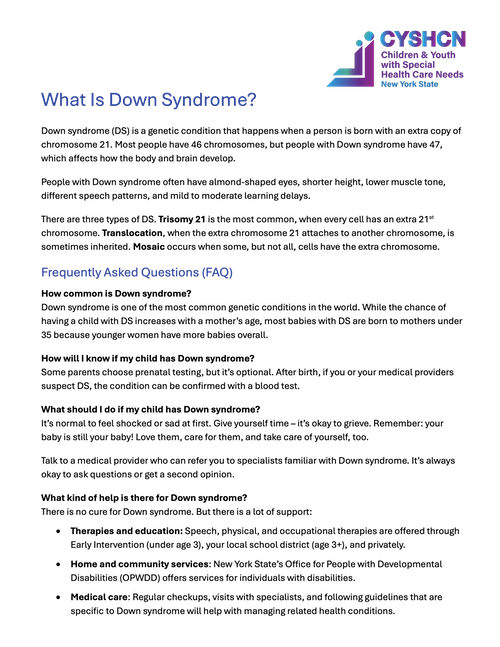
Down syndrome (DS) is a genetic condition that happens when a person is born with an extra copy of chromosome 21. Most people have 46 chromosomes, but people with Down syndrome have 47, which affects how the body and brain develop.
People with Down syndrome often have almond-shaped eyes, shorter height, lower muscle tone, different speech patterns, and mild to moderate learning delays.
There are three types of DS. Trisomy 21 is the most common, when every cell has an extra 21st chromosome. Translocation, when the extra chromosome 21 attaches to another chromosome, is sometimes inherited. Mosaic occurs when some, but not all, cells have the extra chromosome.
Frequently Asked Questions (FAQ)
How common is Down syndrome?
Down syndrome is one of the most common genetic conditions in the world. While the chance of having a child with DS increases with a mother's age, most babies with DS are born to mothers under 35 because younger women have more babies overall.
How will I know if my child has Down syndrome?
Some parents choose prenatal testing, but it's optional. After birth, if you or your medical providers suspect DS, the condition can be confirmed with a blood test.
What should I do if my child has Down syndrome?
It's normal to feel shocked or sad at first. Give yourself time — it's okay to grieve. Remember: your baby is still your baby! Love them, care for them, and take care of yourself, too.
Talk to a medical provider who can refer you to specialists familiar with Down syndrome. It's always okay to ask questions or get a second opinion.
What kind of help is there for Down syndrome?
There is no cure for Down syndrome. But there is a lot of support:
- Therapies and education: Speech, physical, and occupational therapies are offered through Early Intervention (under age 3), your local school district (age 3+), and privately.
- Home and community services: New York State's Office for People with Developmental Disabilities (OPWDD) offers services for individuals with disabilities.
- Medical care: Regular checkups, visits with specialists, and following guidelines that are specific to Down syndrome will help with managing related health conditions.
- Support groups: Connecting with other families, online or in person, can be very helpful.
What other conditions are common in people with Down syndrome?
Common medical conditions that occur with DS include: heart problems, ADHD, poor vision, hearing loss, digestive issues, sleep apnea, thyroid disease, and a weakened immune system.
Talking with a Medical Provider
When talking with medical providers or specialists, you might want to:
- Be informed and organized: Learn about DS and keep your child's medical information up to date.
- Work as a team: Make sure your child's providers can share information and test results.
- Speak up: If a medical provider doesn't take your child's needs seriously, you can find a new provider and report discrimination.
What You Can Do at Home
While waiting for services and providers you can:
- Create routines: Keep a regular schedule. Use checklists and pictures to show what's next.
- Give clear instructions: Use short, simple sentences and allow your child time to respond.
- Have fun: Even with therapy and support, your child will grow at their own pace. Focus on connection and joy, not "fixing" them.
Learning about Down syndrome and getting help is a journey. You're not alone.
Go Deeper
Find Resources
Search New York State
Families, caregivers, youth, and community partners in New York State can use this searchable resource guide to find information, services, and support. ACT for Youth.
GiGi's Playhouse: Down Syndrome Achievement Centers
GiGi's Playhouse centers offer free, research-based programs to help people with Down syndrome build skills in literacy, math, speech, fitness, and social development in a fun, encouraging environment. A Virtual Playhouse is also available. GiGi's Playhouse.
Adult (and Teen) Down Syndrome Center
Based in Illinois, the Adult Down Syndrome Center provides health care and services for individuals with Down syndrome and their families, as well as an online library of resources. While resources are focused on adults with DS, many of the topics are relevant to teens. Advocate Medical Group.
National Down Syndrome Congress
The National Down Syndrome Congress (NDSC) is a not-for-profit organization dedicated to an improved world for individuals with Down syndrome. They offer support and information for anyone touched by or seeking to learn about Down syndrome, from the moment of diagnosis, whether prenatal or at birth, through adulthood. NDSC.
New York State Resources
Early Intervention
The New York State Early Intervention Program (EIP) is part of the national Early Intervention Program for infants and toddlers with disabilities and their families. EIP offers a variety of therapeutic and support services. Children under age 3 who are diagnosed with Down syndrome are eligible for the program. New York State Department of Health.
Preschool Special Education
The New York State Education Department Office of Special Education oversees a statewide preschool special education program with school districts, municipalities, approved providers, and parents. Evaluations and instructional services are provided to eligible children who have a disability that affects their learning. New York State Education Department.
Office for People with Developmental Disabilities (OPWDD)
OPWDD is responsible for coordinating services for New Yorkers with developmental disabilities, including DS. To access OPWDD services, begin with the "Front Door." Front Door staff will guide you through the steps involved in finding out if you are eligible for services with OPWDD, identify your needs, goals and preferences, and help you work on a plan for getting those services. OPWDD.
About This Series
This series of handouts and web pages on health conditions was written by clinicians in Weill Cornell Medicine's Pediatric Mental Health Integration Program, partners in the ACT for Youth CYSHCN Program Center of Excellence at Cornell University.