Tourette Syndrome
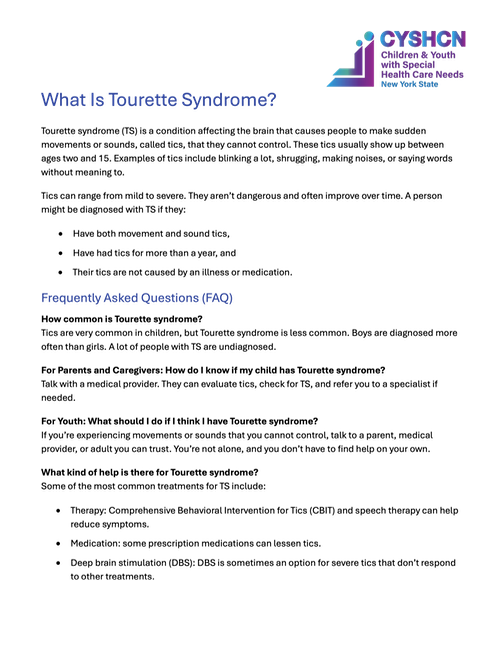
Tourette syndrome (TS) is a condition affecting the brain that causes people to make sudden movements or sounds, called tics, that they cannot control. These tics usually show up between ages two and 15. Examples of tics include blinking a lot, shrugging, making noises, or saying words without meaning to.
Tics can range from mild to severe. They aren't dangerous and often improve over time. A person might be diagnosed with TS if they:
- Have both movement and sound tics,
- Have had tics for more than a year, and
- Their tics are not caused by an illness or medication.
Frequently Asked Questions (FAQ)
How common is Tourette syndrome?
Tics are very common in children, but Tourette syndrome is less common. Boys are diagnosed more often than girls. A lot of people with TS are undiagnosed.
For Parents and Caregivers: How do I know if my child has Tourette syndrome?
Talk with a medical provider. They can evaluate tics, check for TS, and refer you to a specialist if needed.
For Youth: What should I do if I think I have Tourette syndrome?
If you're experiencing movements or sounds that you cannot control, talk to a parent, medical provider, or adult you can trust. You're not alone, and you don't have to find help on your own.
What kind of help is there for Tourette syndrome?
Some of the most common treatments for TS include:
- Therapy: Comprehensive Behavioral Intervention for Tics (CBIT) and speech therapy can help reduce symptoms.
- Medication: some prescription medications can lessen tics.
- Deep brain stimulation (DBS): DBS is sometimes an option for severe tics that don't respond to other treatments.
What other conditions sometimes occur with Tourette syndrome?
Anxiety, attention-deficit/hyperactivity disorder (ADHD), obsessive-compulsive disorder (OCD), trouble sleeping, and sensory issues can occur along with TS. Tell your medical provider about any symptoms you're noticing.
Talking with a Medical Provider
When talking with medical providers, you might want to share:
- What the tics look like and when they started. Sharing videos can be helpful!
- Other symptoms, even if seemingly unrelated
- Any recent illness or changes in medication
- What others (teachers, friends, family) have noticed
What You Can Do at Home
While waiting for your appointment, it may help to:
- Manage stress: Stress can make tics worse. Try deep breathing or calming techniques.
- Ignore when you can: Not focusing on tics can help reduce them. Tics are natural! Remembering that can lessen the stress and stigma around them.
- Avoid punishment: Tics are uncontrollable and natural. Never punish for tics!
- Talk to teachers and others: Small changes in daily life can help manage tics. Talking openly about TS can lead to more support and understanding.
Learning about Tourette syndrome and getting help is a journey. You're not alone.
Go Deeper
Find Resources
Search New York State
Families, caregivers, youth, and community partners in New York State can use this searchable resource guide to find information, services, and support. ACT for Youth.
Resources for All Ages
Find articles, guides, and other resources written for parents, children, and teens on many aspects of life with Tourette. Tourette Association.
Treating and Managing Tourette Syndrome
TS Treatment
While TS tics are not easily controlled, treatment may help with management. Learn more about treatment options here, including Comprehensive Behavioral Intervention for Tics (CBIT), Deep Brain Stimulation, medications, and speech therapy. Tourette Association.
What Educators Should Know
A positive classroom environment may reduce the stress of TS. This fact sheet can help teachers understand what TS is and how to help. Nemours.
About This Series
This series of handouts and web pages on health conditions was written by clinicians in Weill Cornell Medicine's Pediatric Mental Health Integration Program, partners in the ACT for Youth CYSHCN Program Center of Excellence at Cornell University.