Arthritis
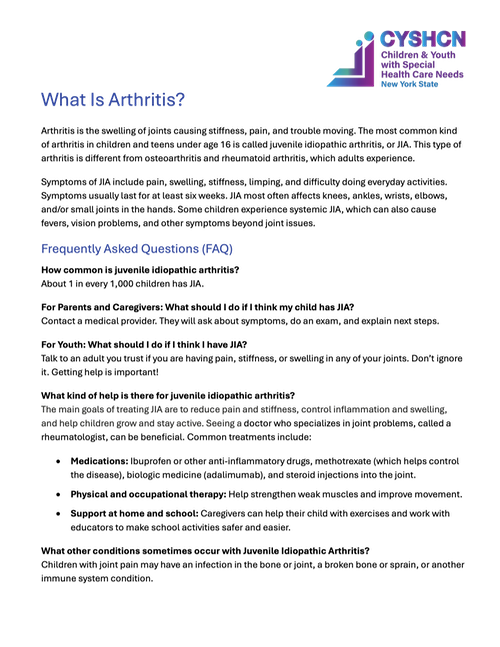
Arthritis is the swelling of joints causing stiffness, pain, and trouble moving. The most common kind of arthritis in children and teens under age 17 is called juvenile idiopathic arthritis, or JIA. This type of arthritis is different from osteoarthritis and rheumatoid arthritis, which adults experience.
Symptoms of JIA include pain, swelling, stiffness, limping, and difficulty doing everyday activities. Symptoms usually last for at least six weeks. JIA most often affects knees, ankles, wrists, elbows, and/or small joints in the hands. Some children experience systemic JIA, which can also cause fevers, vision problems, and other symptoms beyond joint issues.
Frequently Asked Questions (FAQ)
How common is juvenile idiopathic arthritis?
About 1 in every 1,000 children has JIA.
For Parents and Caregivers: What should I do if I think my child has JIA?
Contact a medical provider. They will ask about symptoms, do an exam, and explain next steps.
For Youth: What should I do if I think I have JIA?
Talk to an adult you trust if you are having pain, stiffness, or swelling in any of your joints. Don't ignore it. Getting help is important!
What kind of help is there for juvenile idiopathic arthritis?
The main goals of treating JIA are to reduce pain and stiffness, control inflammation and swelling, and help children grow and stay active. Seeing a doctor who specializes in joint problems, called a rheumatologist, can be beneficial. Common treatments include:
- Medications: Ibuprofen or other anti-inflammatory drugs, methotrexate (which helps control the disease), biologic medicine (adalimumab), and steroid injections into the joint.
- Physical and occupational therapy: Help strengthen weak muscles and improve movement.
- Support at home and school: Caregivers can help their child with exercises and work with educators to make school activities safer and easier.
What other conditions sometimes occur with Juvenile Idiopathic Arthritis?
Children with joint pain may have an infection in the bone or joint, a broken bone or sprain, or another immune system condition.
Talking with a Medical Provider
When talking with medical providers or specialists, you might want to:
- Bring notes! Share any concerns you've noticed or others have pointed out.
- Describe all symptoms, even if they seem unrelated.
- Ask questions like:
- "What else could be causing joint swelling and pain?"
- "How do we decide which treatment to start with?"
- "Is JIA something my child will always have or will they grow out of it?"
What You Can Do at Home
Getting help can take time, and there are often waitlists. However, there are things you can do now:
- Keep moving: Swimming and yoga are a great way to stay active when joints hurt.
- Eat well: A balanced diet with protein, fruits, and vegetables supports overall health.
- Talk openly: Open and honest conversations about arthritis and ways to manage it will help with frustration and sadness that might occur.
- Model behavior: Include the entire family in practicing healthy habits — which will benefit everyone!
- Have fun: Including or modifying favorite activities can help keep spirits up!
Learning about juvenile idiopathic arthritis and getting help is a journey. You're not alone.
Go Deeper
Find Resources
Search New York State
Families, caregivers, youth, and community partners in New York State can use this searchable resource guide to find information, services, and support. ACT for Youth.
Arthritis Types and Treatments
Types of JIA
This JIA overview includes brief descriptions of different types of the condition. See "More on this Topic" links next to the article for additional information about each type, as well as information written for kids and teens. Nemours.
JIA Tests and Treatments
Learn more about JIA, tests, treatments, and what to expect. Weill Cornell Medicine and Ignite Healthwise.
Resources for Teens
Understanding JIA
You might think that arthritis is something only grandparents get, but it's a condition that affects people of all ages. Written for teens, this article provides an overview of JIA. Nemours.
About This Series
This series of handouts and web pages on health conditions was written by clinicians in Weill Cornell Medicine's Pediatric Mental Health Integration Program, partners in the ACT for Youth CYSHCN Program Center of Excellence at Cornell University.