Depression
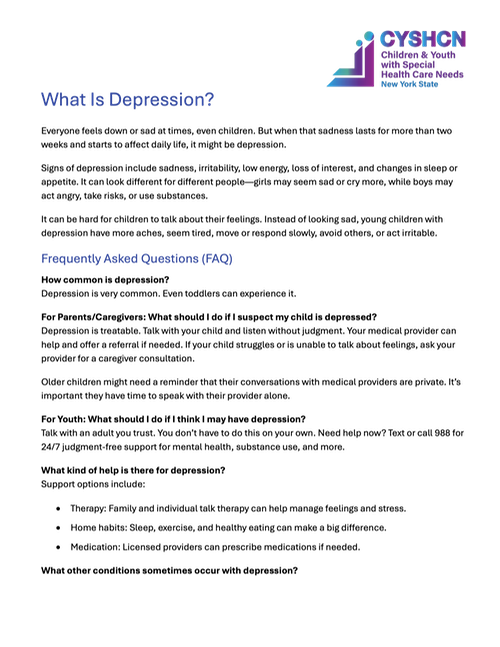
Everyone feels down or sad at times, even children. But when that sadness lasts for more than two weeks and starts to affect daily life, it might be depression.
Signs of depression include sadness, irritability, low energy, loss of interest, and changes in sleep or appetite. It can look different for different people — girls may seem sad or cry more, while boys may act angry, take risks, or use substances.
It can be hard for children to talk about their feelings. Instead of looking sad, young children with depression have more aches, seem tired, move or respond slowly, avoid others, or act irritable.
Frequently Asked Questions (FAQ)
How common is depression?
Depression is very common. Even toddlers can experience it.
For Parents/Caregivers: What should I do if I suspect my child is depressed?
Depression is treatable. Talk with your child and listen without judgment. Your medical provider can help and offer a referral if needed. If your child struggles or is unable to talk about feelings, ask your provider for a caregiver consultation.
Older children might need a reminder that their conversations with medical providers are private. It's important they have time to speak with their provider alone.
For Youth: What should I do if I think I may have depression?
Talk with an adult you trust. You don't have to do this on your own. Need help now? Text or call 988 for 24/7 judgment-free support for mental health, substance use, and more.
What kind of help is there for depression?
Support options include:
- Therapy: Family and individual talk therapy can help manage feelings and stress.
- Home habits: Sleep, exercise, and healthy eating can make a big difference.
- Medication: Licensed providers can prescribe medications if needed.
What other conditions sometimes occur with depression?
Sometimes, other conditions like anxiety and substance use are present along with depression. Neurodiversity — the many different ways we think and process experiences — can also play a role. By being open about all symptoms, you'll help medical providers give the best care.
Talking with a Medical Provider
When you talk with medical providers, you might want to:
- Bring notes! Ahead of the appointment, take notes on things that worry you. Share concerns that others have pointed out.
- Ask questions like:
- "Are these symptoms due to depression or could other factors be involved?"
- "Do I need to see a specialist?"
- "What are my treatment options?"
What You Can Do at Home
While waiting for your appointment, it may help to:
- Stay active: Going to school, connecting with friends, and getting outside can improve your mood.
- Get enough sleep: Poor sleep impacts our entire body — if snoring or restlessness is an issue, mention it to your medical provider.
- Stay safe: If you are ever worried about suicide or self-harm, call or text 988 (the national Suicide and Crisis Lifeline) or go to the ER.
Learning about depression and getting help is a journey. You're not alone.
Go Deeper
Find Resources
Search New York State
Families, caregivers, youth, and community partners in New York State can use this searchable resource guide to find information, services, and support. ACT for Youth.
Depression Types and Treatments
Kinds of Depression
Depression can take a number of different forms. Major depressive disorder, persistent depressive disorder, disruptive mood dysregulation disorder, premenstrual dysphoric disorder, and seasonal affective disorder are briefly described in this article. Child Mind Institute.
Treatment for Children and Teens
Treatment for depression almost always involves therapy, and it can include medication as well. This article describes the options, and also discusses going off medication and family involvement in treatment. Child Mind Institute.
Medication
Not all young people who are depressed need to be treated with medication. For children and teenagers whose depression symptoms are mild, therapy is the recommended first choice. However, if there is no response with therapy or therapy is not available, SSRI medications should be considered. Child Mind Institute.
Understanding Mental Health
Healthy Children: Mental Health Conditions
The American Academy of Pediatricians (AAP) offers an extensive website for parents with useful articles and information on a wide array of health conditions. Here, learn more about mental health conditions that can affect children and teens. AAP.
Mental Health in Adolescence
In this section of the ACT for Youth website we offer a brief overview of mental health and mental health disorders in adolescence, as well as a clearinghouse of resources. ACT for Youth.
About This Series
This series of handouts and web pages on health conditions was written by clinicians in Weill Cornell Medicine's Pediatric Mental Health Integration Program, partners in the ACT for Youth CYSHCN Program Center of Excellence at Cornell University.