Diabetes
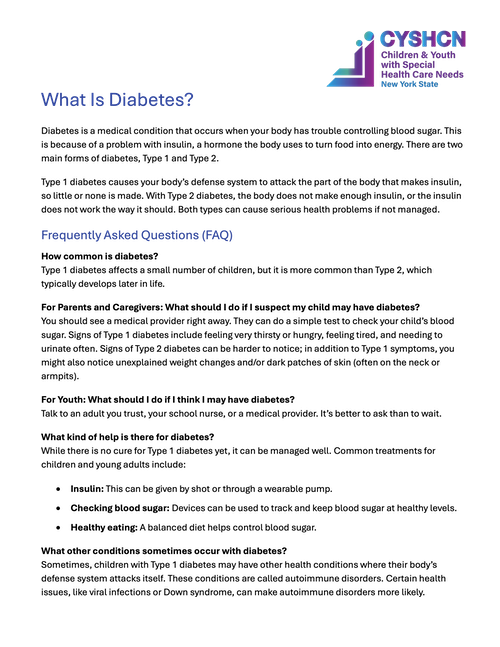
Diabetes is a medical condition that occurs when your body has trouble controlling blood sugar. This is because of a problem with insulin, a hormone the body uses to turn food into energy. There are two main forms of diabetes, Type 1 and Type 2.
Type 1 diabetes causes your body's defense system to attack the part of the body that makes insulin, so little or none is made. With Type 2 diabetes, the body does not make enough insulin, or the insulin does not work the way it should. Both types can cause serious health problems if not managed.
Frequently Asked Questions (FAQ)
How common is diabetes?
Type 1 diabetes affects a small number of children, but it is more common than Type 2, which typically develops later in life.
For Parents and Caregivers: What should I do if I suspect my child may have diabetes?
You should see a medical provider right away. They can do a simple test to check your child's blood sugar. Signs of Type 1 diabetes include feeling very thirsty or hungry, feeling tired, and needing to urinate often. Signs of Type 2 diabetes can be harder to notice; in addition to Type 1 symptoms, you might also notice unexplained weight changes and/or dark patches of skin (often on the neck or armpits).
For Youth: What should I do if I think I may have diabetes?
Talk to an adult you trust, your school nurse, or another medical provider. It's better to ask than to wait.
What kind of help is there for diabetes?
While there is no cure for Type 1 diabetes yet, it can be managed well. Common treatments for children and young adults include:
- Insulin: This can be given by shot or through a wearable pump.
- Checking blood sugar: Devices can be used to track and keep blood sugar at healthy levels.
- Healthy eating: A balanced diet helps control blood sugar.
What other conditions sometimes occur with diabetes?
Sometimes, children with Type 1 diabetes may have other health conditions where their body's defense system attacks itself. These conditions are called autoimmune disorders. Certain health issues, like viral infections or Down syndrome, can make autoimmune disorders more likely.
It's important to tell the medical provider about all symptoms you're noticing, even if they don't seem related.
Talking with a Medical Provider
When talking with medical providers or specialists, you might want to:
- Bring notes! Write down any concerns or symptoms you or others have noticed before you go.
- Ask questions like:
- "Can you check my child's blood sugar?"
- "Do we need to see a diabetes specialist (called an endocrinologist)?"
- "What treatments are best for my child?"
What You Can Do at Home
Getting help can take time. While waiting for your appointment, it may be useful to:
- Check blood sugar regularly.
- Keep a log of symptoms and patterns.
- Learn the signs of high and low blood sugar.
- Encourage activity, which is important in supporting health.
Learning about diabetes and getting help is a journey. You're not alone.
Go Deeper
Find Resources
Search New York State
Families, caregivers, youth, and community partners in New York State can use this searchable resource guide to find information, services, and support. ACT for Youth.
Understanding Diabetes
This website provides a wealth of information as well as tools and resources for people living with Type 1 or Type 2 diabetes. American Diabetes Association.
Type 1 Resources
These resource guides cover food and nutrition, complications, health insurance, schools, parenting, and much more. Breakthrough T1D.
Managing Diabetes
Monitors, Pens, Pumps
Whether it be a continuous glucose monitor (CGM), insulin pump, insulin pen, or other diabetes technology, tech has become an essential part of diabetes management. American Diabetes Association.
Caretaking
Being a caretaker for people living with diabetes means providing essential support with tasks like blood sugar monitoring, meal planning, and managing medication. It's a role that requires patience, understanding, and adaptability to help ensure health and well-being while navigating the emotional aspects of care. Beyond Type 1.
Children and Diabetes
This collection of articles covers diabetes topics in plain English for parents and educators. Nemours.
About This Series
This series of handouts and web pages on health conditions was written by clinicians in Weill Cornell Medicine's Pediatric Mental Health Integration Program, partners in the ACT for Youth CYSHCN Program Center of Excellence at Cornell University.