Muscular Dystrophy
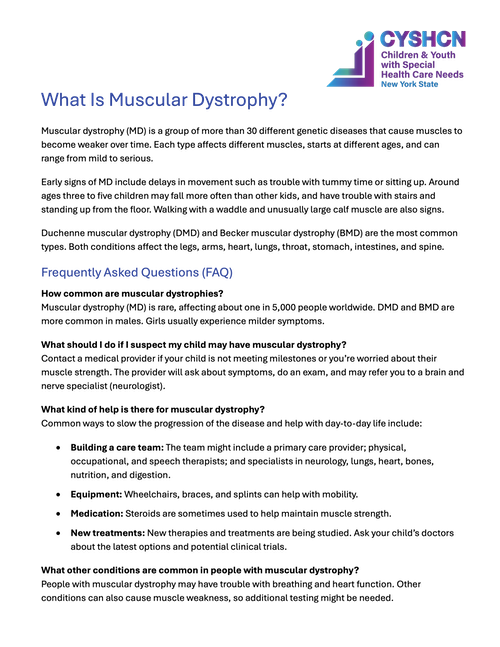
Muscular dystrophy (MD) is a group of more than 30 different genetic diseases that cause muscles to become weaker over time. Each type affects different muscles, starts at different ages, and can range from mild to serious.
Early signs of MD include delays in movement such as trouble with tummy time or sitting up. Around ages three to five children may fall more often than other kids, and have trouble with stairs and standing up from the floor. Walking with a waddle and unusually large calf muscle are also signs.
Duchenne muscular dystrophy (DMD) and Becker muscular dystrophy (BMD) are the most common types. Both conditions affect the legs, arms, heart, lungs, throat, stomach, intestines, and spine.
Frequently Asked Questions (FAQ)
How common are muscular dystrophies?
Muscular dystrophy (MD) is rare, affecting about one in 5,000 people worldwide. DMD and BMD are more common in males. Girls usually experience milder symptoms.
What should I do if I suspect my child may have muscular dystrophy?
Contact a medical provider if your child is not meeting milestones or you're worried about their muscle strength. The provider will ask about symptoms, do an exam, and may refer you to a brain and nerve specialist (neurologist).
What kind of help is there for muscular dystrophy?
Common ways to slow the progression of the disease and help with day-to-day life include:
- Building a care team: The team might include a primary care provider; physical, occupational, and speech therapists; and specialists in neurology, lungs, heart, bones, nutrition, and digestion.
- Equipment: Wheelchairs, braces, and splints can help with mobility.
- Medication: Steroids are sometimes used to help maintain muscle strength.
- New treatments: New therapies and treatments are being studied. Ask your child's doctors about the latest options and potential clinical trials.
What other conditions are common in people with muscular dystrophy?
People with muscular dystrophy may have trouble with breathing and heart function. Other conditions can also cause muscle weakness, so additional testing might be needed.
Talking with a Medical Provider
When talking with medical providers or specialists, you might want to:
- Bring and take notes: Write down what you're seeing at home and when you notice it. Take notes while talking to medical providers. Be sure to ask for the visit summary before you leave.
- Ask questions like:
- "Does my child qualify for steroid treatment?"
- "How can we get as much therapy as possible?"
- "What supports can the school provide so my child can participate fully?"
What You Can Do at Home
Finding the supports and services you need can take time. There are things you can do while waiting:
- Stay active: Do physical therapy exercises to help preserve movement.
- Adapt living spaces: Making adjustments around your home can help your child move more freely and safely.
- Manage stress: It's normal to feel sad, frustrated, and overwhelmed. It's important to take a break and do things that you and your child enjoy.
Learning about muscular dystrophy and getting help is a journey. You're not alone.
Go Deeper
Find Resources
Search New York State
Families, caregivers, youth, and community partners in New York State can use this searchable resource guide to find information, services, and support. ACT for Youth.
Muscular Dystrophy Association
The Muscular Dystrophy Association (MDA) provides an abundance of resources for the neuromuscular disease community.
Information for Families and Caregivers
Muscular Dystrophy in Young People
This article provides a more detailed overview of muscular dystrophy, its causes, types, challenges, and treatments. American Academy of Pediatricians.
Muscular Dystrophies, Genetic Testing, Assistive Devices
This collection of articles offers an overview of the types of muscular dystrophy; specific information on DMD, BMD, and Spinal Muscular Atrophy; and genetic testing. Nemours.
About This Series
This series of handouts and web pages on health conditions was written by clinicians in Weill Cornell Medicine's Pediatric Mental Health Integration Program, partners in the ACT for Youth CYSHCN Program Center of Excellence at Cornell University.